




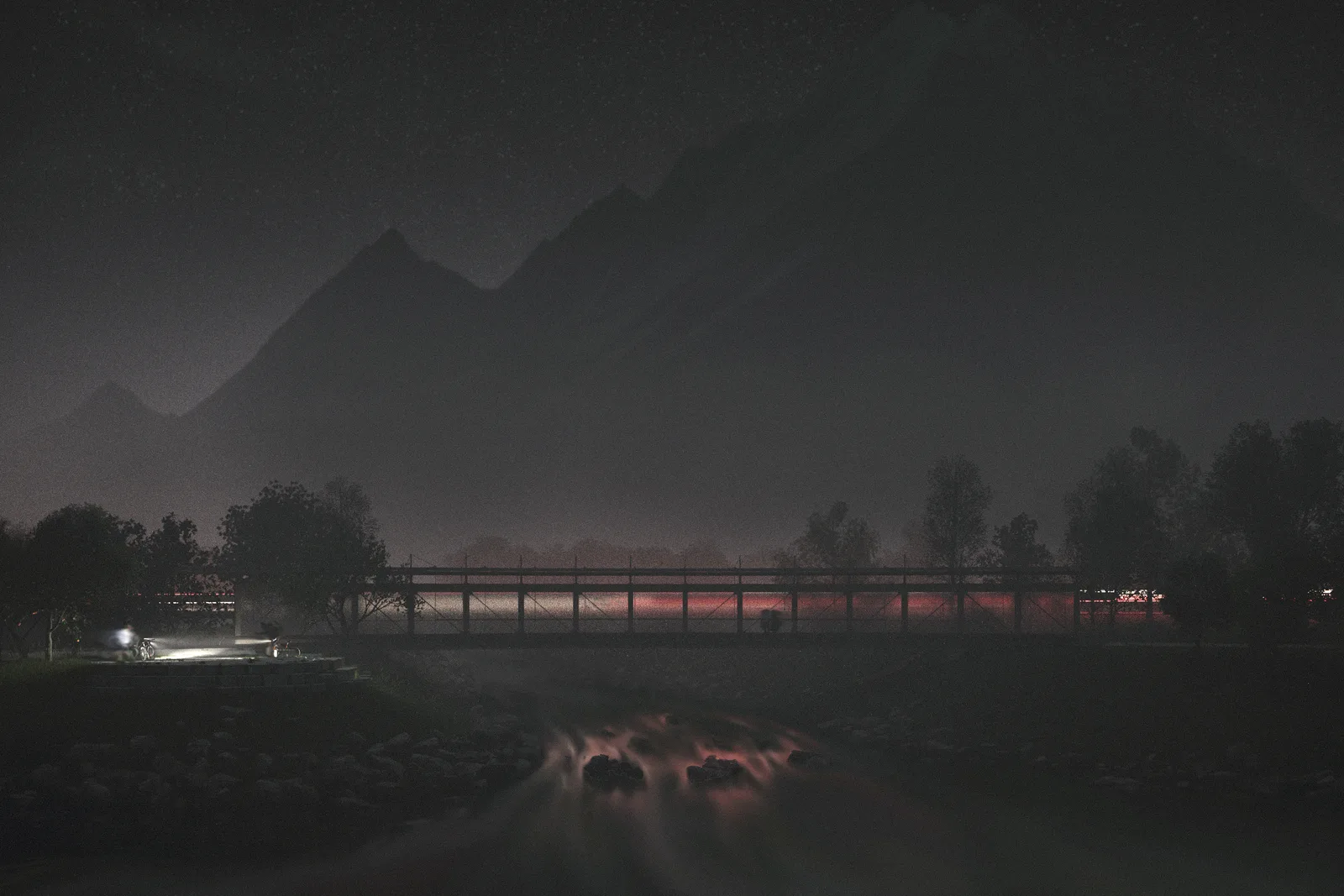
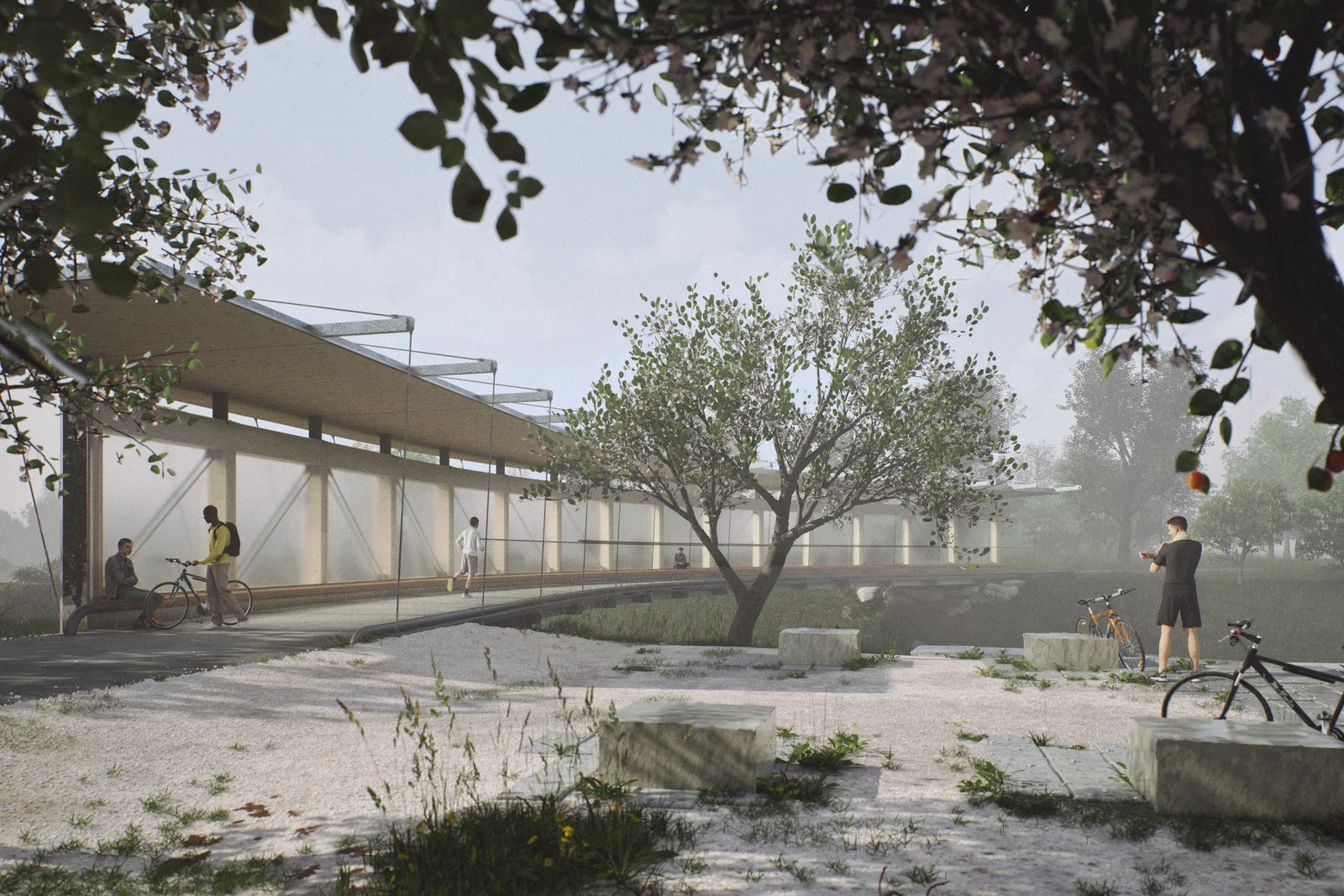
Where the Trient meets the Rhône, a truss of solid local timber spans the river and carries a light roof and a suspended deck: a covered bridge reinterpreted at the heart of a riverside park.
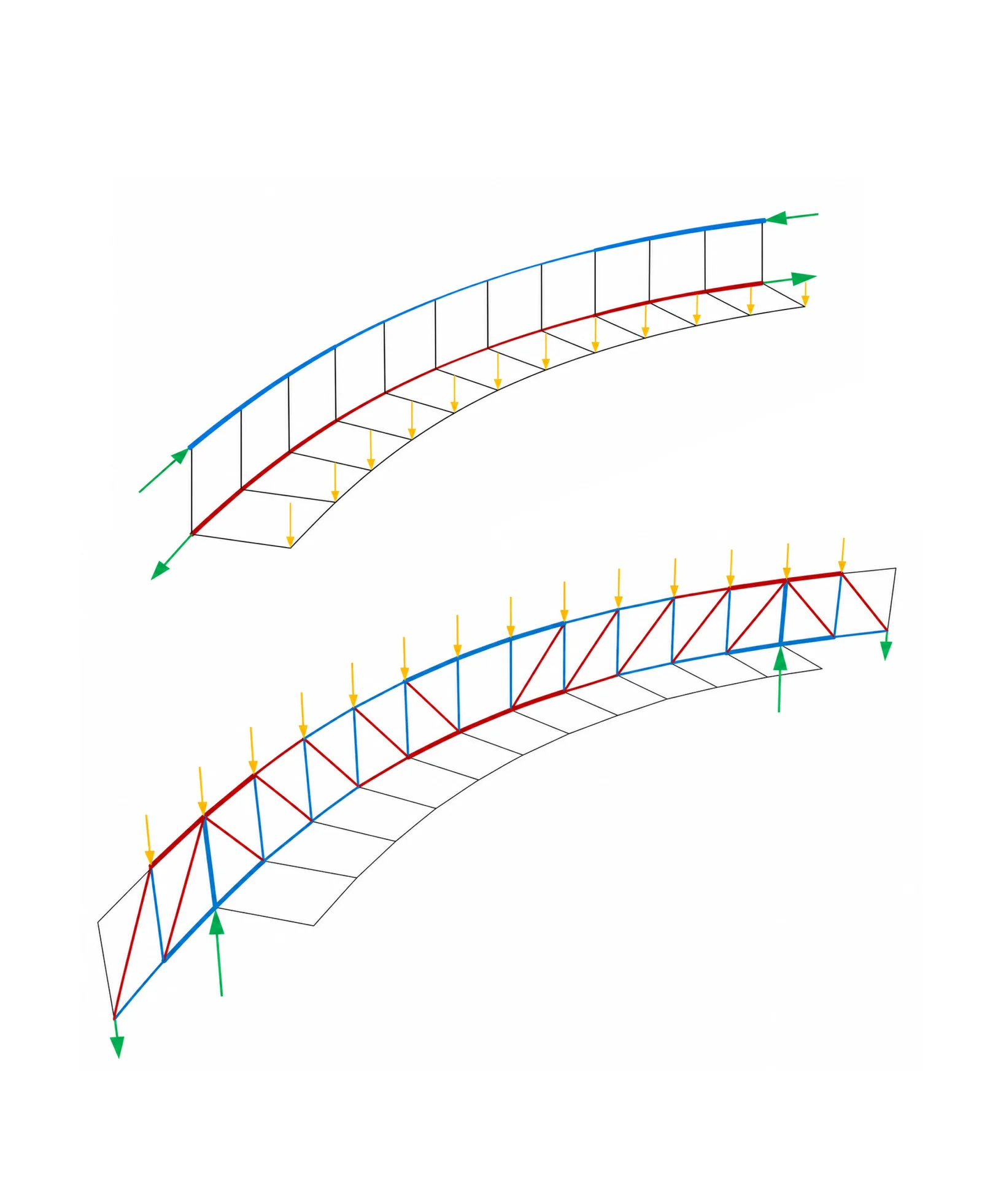
At the mouth of the Trient the valley narrows, bundling the Rhône, the motorway, the cliffs of Dorénaz, canals and power lines. The Trient, arriving at a right angle, breaks this linear order; the Halte-Parc project makes the most of this exceptional spot with a bridge stop and a riverbank stop, built as early as the temporary phase of the Third Rhône Correction. The crossing is a truss of solid local timber whose geometry, like the trees, recalls an archaic timescale; the roof and the deck hang from it like light fittings added later. In fact the three elements support one another through an interplay of tension. The truss's structural depth makes it a noise barrier against the motorway, and its slight curve in plan wraps around the space of the footbridge, reinterpreting the covered-bridge type.